
When we talk about wasting less food, it's easy to focus on actions like using up leftovers, checking expiration dates, or finding a recipe to use up food that's been sitting in the fridge for days. But at Peris, we've long believed that this can start a little earlier: with the purchasing decision, and for that, freedom is essential. A family of six, a couple, and someone living alone don't need to buy the same amount. Nor do we consume the same amount when we have guests over as when we're looking for fruit to take to work or preparing a side dish for dinner. It seems quite obvious, and yet, behind something so commonplace lies an interesting issue for those of us who work in food production and distribution: if consumers' needs are different, the supply should also be able to adapt to them. And there, in that possibility of choice, in that freedom, lies a way to contribute to reducing food waste.
Whole, half, quartered or chopped
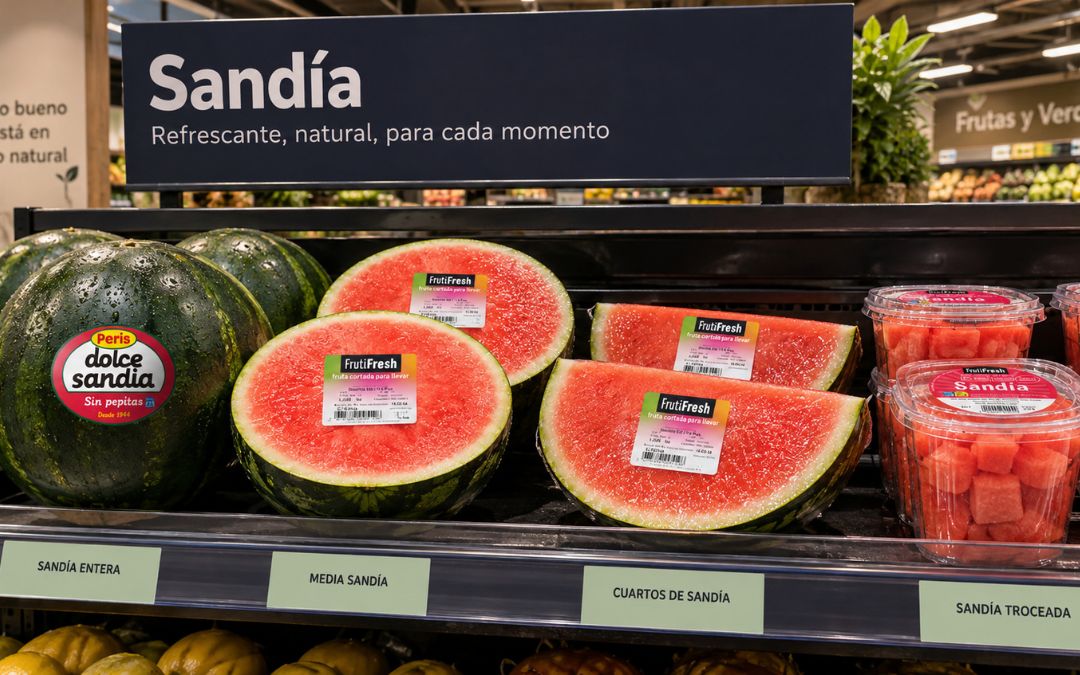
Melon and watermelon are two good examples. At Peris, we work with both products in different formats , from whole pieces to halves, quarters, and diced fruit, seeking to meet different needs and consumption occasions. Because the right format shouldn't be determined solely by what we, as producers or distributors, decide. It's the one that best suits the quantity the consumer actually needs. For example, if we have eight people for lunch at home, a whole watermelon is probably a much more logical choice than several individual containers. If we live alone and want watermelon for an afternoon snack, the opposite is true. And in between these two extremes, there's a couple who prefers to take a quarter, a small family for whom half a piece is more suitable, or someone who finds it very convenient to take ready-to-eat fruit to the office. The same reasoning applies to pumpkin, a product we know very well at Peris. A whole pumpkin can be perfect for a family, for cooking several dishes, or for a recipe that requires a large quantity. At other times, what we need is a much smaller quantity, hence the half pumpkin format or, directly, being able to have the peeled and chopped pumpkin when we need speed in preparation.
Being able to choose also matters
Households have changed, and so have our consumption habits. There are large and small families, people living alone, couples, shared apartments, seniors, young people who spend a good part of the day away from home, and households where the needs can be completely different in a single week. Expecting everyone to buy the same thing would be pointless. That's why, when we at Peris work simultaneously with both first- and fourth-range products, we don't see one as a substitute for the other. They are different solutions for different needs. Whole products still make perfect sense, and ready-made products also do when they are a better fit for a particular consumption occasion. Ultimately, we're talking about something as simple as being able to choose. And this issue also has important implications for distribution. We know that shelf space is limited, that each product must justify its presence, and that an efficient assortment isn't about accumulating formats. The challenge lies precisely in finding the balance. A smart assortment should combine turnover and profitability with an increasingly precise understanding of how the target society lives and consumes. Innovation shouldn't be solely about telling consumers what they should want either. Often it starts just the opposite: listening to how they consume and offering them what they need.
The utilization begins long before
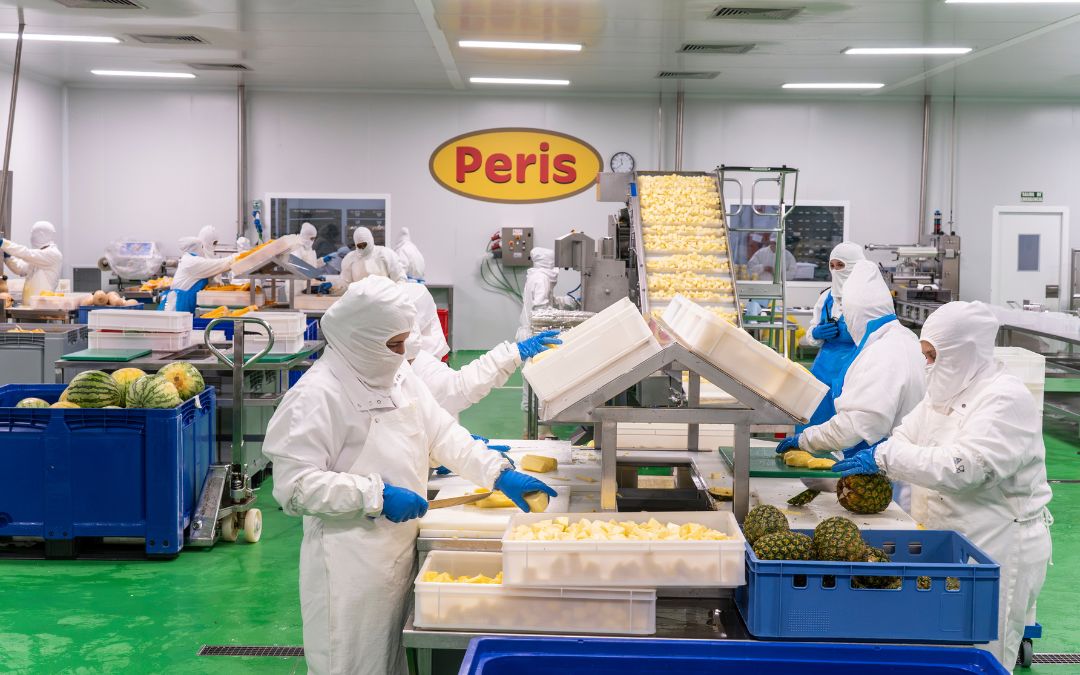 The fight against waste doesn't end, of course, with the formats that reach the store shelves. It also compels us to look inward and ask ourselves how we can better utilize every raw material that passes through our facilities. The freshest cuts of produce open up interesting possibilities in this regard. Certain pieces that, for aesthetic reasons, may not meet the established criteria for sale as whole products can retain the qualities we seek within them and find a use in pre-cut formats. At Peris, we also work on the continuous improvement of our processes to make the most of raw materials and reduce the waste generated during their transformation. And not only that, we also investigate new ways to extend the product's shelf life . The interesting thing is that we can still go a step further: ask ourselves what we do with what inevitably remains outside the final product. That's why we collaborate with universities, technological institutes, research entities, and other companies on projects focused on the utilization and valorization of byproducts. One of the most recent examples is found in pineapples. Its core, which is left out of the prepared fruit tubs, has become a raw material for obtaining high-quality bromelain , giving new value to a part of the fruit that could no longer continue its journey as fresh fruit.
The right amount also matters
Reducing food waste is a huge challenge, and it would be naive to think there's a single solution. Production, industry, distribution, restaurants, and, of course, the choices we make as consumers all play a role. But some of those choices can be surprisingly simple. A whole watermelon. Half. A quarter. A ready-to-eat container. A whole pumpkin, or just enough to make dinner. For us, the challenge as a company specializing in fresh-cut and minimally processed foods lies in knowing the product, understanding how needs are changing, and being able to offer sensible alternatives, also working alongside distributors to build product ranges that reflect the realities of their customers. The more freedom we have to adjust what we buy to what we truly need, the easier it will be to make the most of it.


